When the Org Chart Becomes the Architecture: How Enterprise Hierarchy Quietly Dictates Technical Outcomes
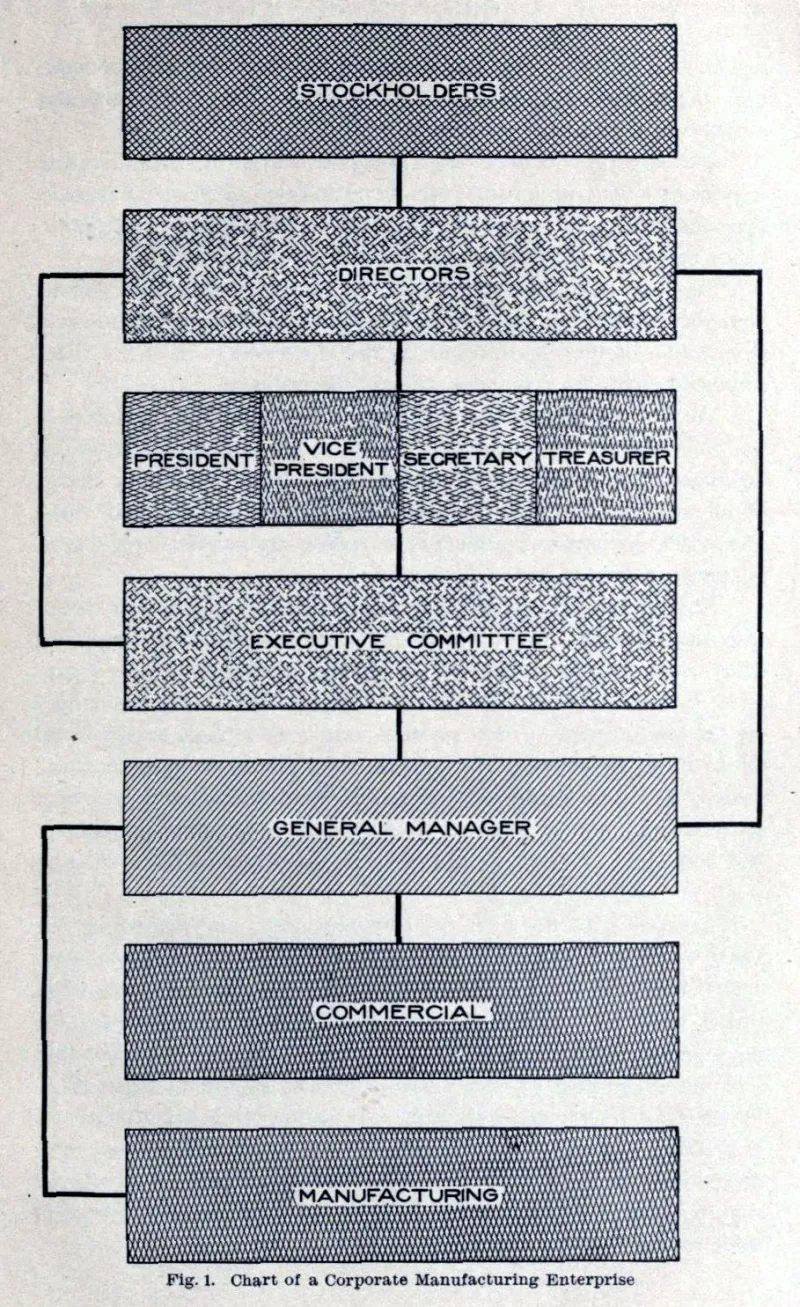
Photo: James Bray Griffith, Public domain, via Wikimedia Commons
The Architecture Nobody Designed
Every enterprise technology leader has encountered the phenomenon at least once: a perfectly sound modernization proposal that stalls not because of budget, not because of technical risk, and not because of a lack of business justification — but because of who reports to whom. The org chart, it turns out, is not merely an administrative diagram. For many large organizations, it functions as a de facto technical specification, determining which platforms get funded, which integrations get prioritized, and which teams are permitted to make decisions in the first place.
This dynamic rarely announces itself. It accumulates quietly, over years of reorganizations and personnel changes, until the structure of the business and the structure of the technology become so thoroughly entangled that separating them feels operationally impossible. By the time an enterprise recognizes the problem, the hierarchy has already embedded itself into the codebase.
How Silos Become Load-Bearing Walls
Organizational silos are frequently discussed in the context of communication breakdowns or duplicated effort — real problems, but relatively surface-level ones. The deeper issue is structural: when engineering teams are organized by business unit rather than by capability or product domain, they tend to build systems that mirror their own boundaries.
A marketing technology team operating under a CMO will architect integrations with tools that serve marketing objectives, often without coordinating with the digital infrastructure team that sits under the CTO. A regional IT group managing its own vendor relationships will make procurement decisions that conflict with enterprise-wide licensing agreements negotiated by a central team three time zones away. These are not failures of individual judgment. They are predictable outcomes of a structure that rewards departmental self-sufficiency over cross-functional coherence.
The technical debt that results is not the familiar kind — accumulated shortcuts and deferred maintenance. It is structural debt, baked into the architecture itself, reflecting the political geography of the organization rather than any rational engineering rationale. Refactoring it requires not just code changes but organizational ones, which is precisely why it persists.
Approval Chains as Velocity Killers
Enterprise approval processes exist for legitimate reasons. Governance, security review, financial oversight — these are not bureaucratic affectations. But when the approval chain for a technical decision requires sign-off from five stakeholders across three departments, each with their own priorities and timelines, the cost of that governance extends well beyond the hours spent in review meetings.
Engineering teams operating under extended approval cycles learn, over time, to avoid decisions that trigger them. They default to existing vendors rather than evaluating alternatives. They scope projects conservatively to stay beneath approval thresholds. They defer modernization work that would require cross-departmental coordination in favor of incremental changes that can be executed within their own lane. The result is a technology organization that is technically active but strategically inert — producing output without producing progress.
This is particularly damaging in web and digital platform contexts, where the pace of external change — evolving browser standards, shifting user expectations, emerging compliance requirements — demands a capacity for rapid, informed decision-making that hierarchical approval structures are fundamentally ill-equipped to support.
The Knowledge Hoarding Problem
Organizational boundaries do not merely constrain decision-making. They obstruct the flow of institutional knowledge in ways that compound over time. When a senior engineer who understands the full context of a legacy integration sits in a different department from the team tasked with replacing it, critical context gets lost — not through negligence, but through the simple fact that cross-departmental knowledge transfer is rarely a formal priority.
This dynamic produces a particularly insidious form of technical risk. Teams making architectural decisions about systems they do not fully understand are likely to replicate the same structural problems that made the original system difficult to maintain. They are building on a foundation they cannot see clearly, in an organization that has not created the conditions for them to see it.
Knowledge sharing across team boundaries requires deliberate structural support: communities of practice, shared documentation standards, cross-functional working groups with genuine authority. In organizations where the hierarchy discourages lateral communication — where information flows up and down reporting lines rather than across them — these mechanisms rarely take hold.
Modernization Efforts and the Political Veto
Perhaps the most consequential way that organizational structure shapes technical outcomes is through the informal veto power that hierarchy confers. A modernization initiative that threatens the operational domain of a senior stakeholder — by consolidating platforms, centralizing a capability that was previously distributed, or reducing headcount in a particular function — faces resistance that has nothing to do with its technical merits.
Enterprise engineering leaders frequently describe the experience of watching technically superior proposals lose to inferior alternatives because the inferior alternative was politically safer. The winning solution was not better engineered. It was better aligned with the existing power structure. Over time, this selection pressure produces a technology landscape that reflects the organization's political equilibrium rather than its digital ambitions.
Addressing this requires acknowledging something that most enterprise technology conversations prefer to avoid: that technical strategy and organizational politics are not separable domains. The most sophisticated architecture review process in the world will produce suboptimal outcomes if the decisions it produces are subsequently filtered through a hierarchy that prioritizes departmental autonomy over enterprise coherence.
Structural Reform as a Technical Prerequisite
The enterprises that successfully execute large-scale digital transformation share a common characteristic that is rarely highlighted in the case studies: they changed their organizational structure before, or in parallel with, changing their technology. They did not attempt to modernize their web platforms, consolidate their data infrastructure, or adopt new development practices while leaving intact the reporting relationships and approval processes that had produced the old systems in the first place.
This is not an argument for wholesale reorganization as a precondition for every technical initiative. It is an argument for treating organizational design as a legitimate engineering concern — one that belongs in the same conversation as platform selection, integration architecture, and performance strategy.
For enterprise technology and digital consulting engagements, this means asking harder questions early: Who owns this decision, and does that ownership reflect the actual scope of the problem? Which approval gates will this initiative encounter, and are those gates calibrated for the pace this initiative requires? Where does institutional knowledge reside, and is the team that needs it positioned to access it?
The org chart is not destiny. But pretending it is irrelevant to technical outcomes is a form of willful optimism that enterprises can no longer afford.